Project Overview
FPV All-Terrain Rover - 6WD Exploration Vehicle represents a targeted engineering achievement delivered under K.N.Erve Technologies Pvt. Ltd. within the Robotics & IoT vertical.
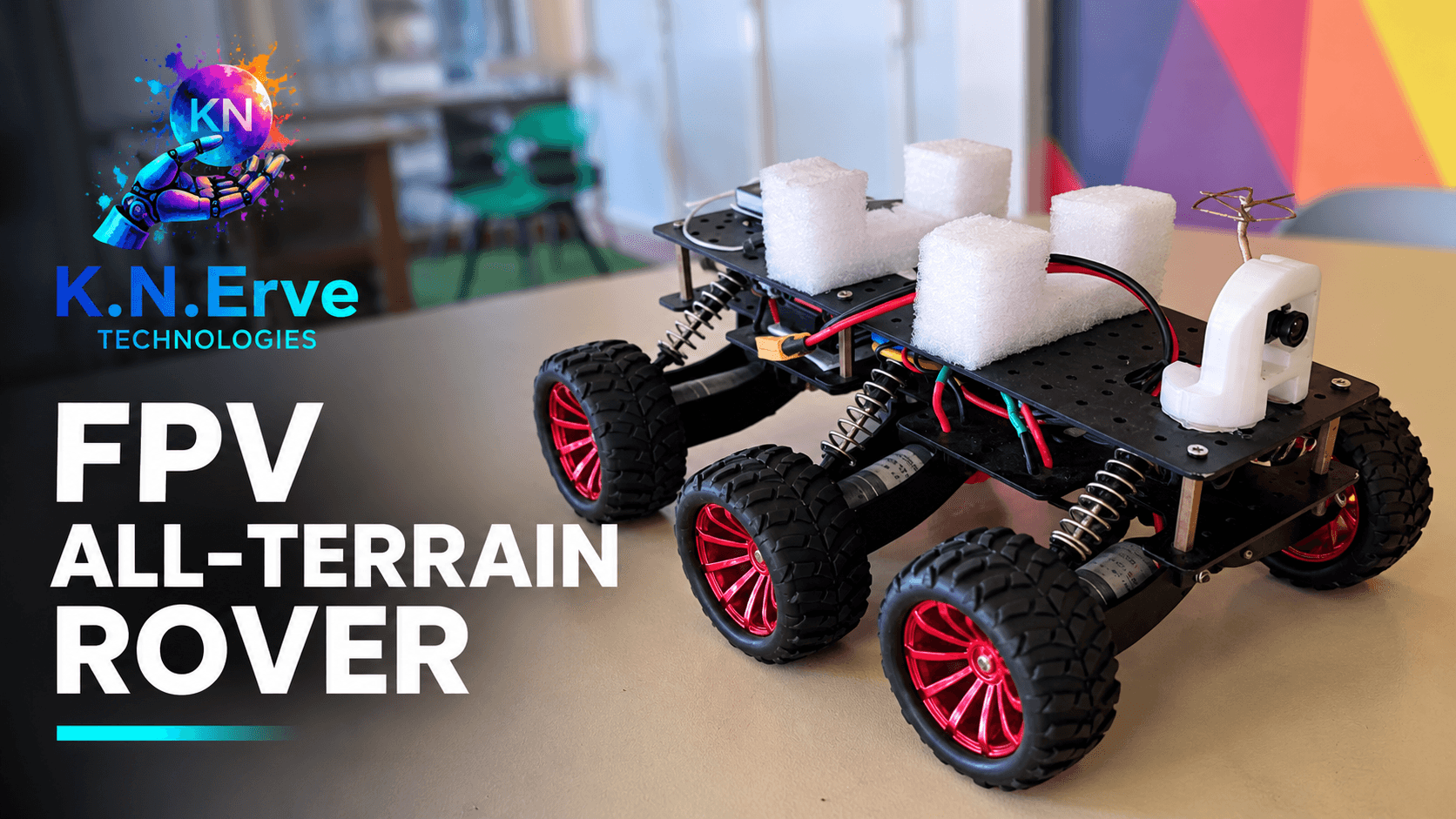
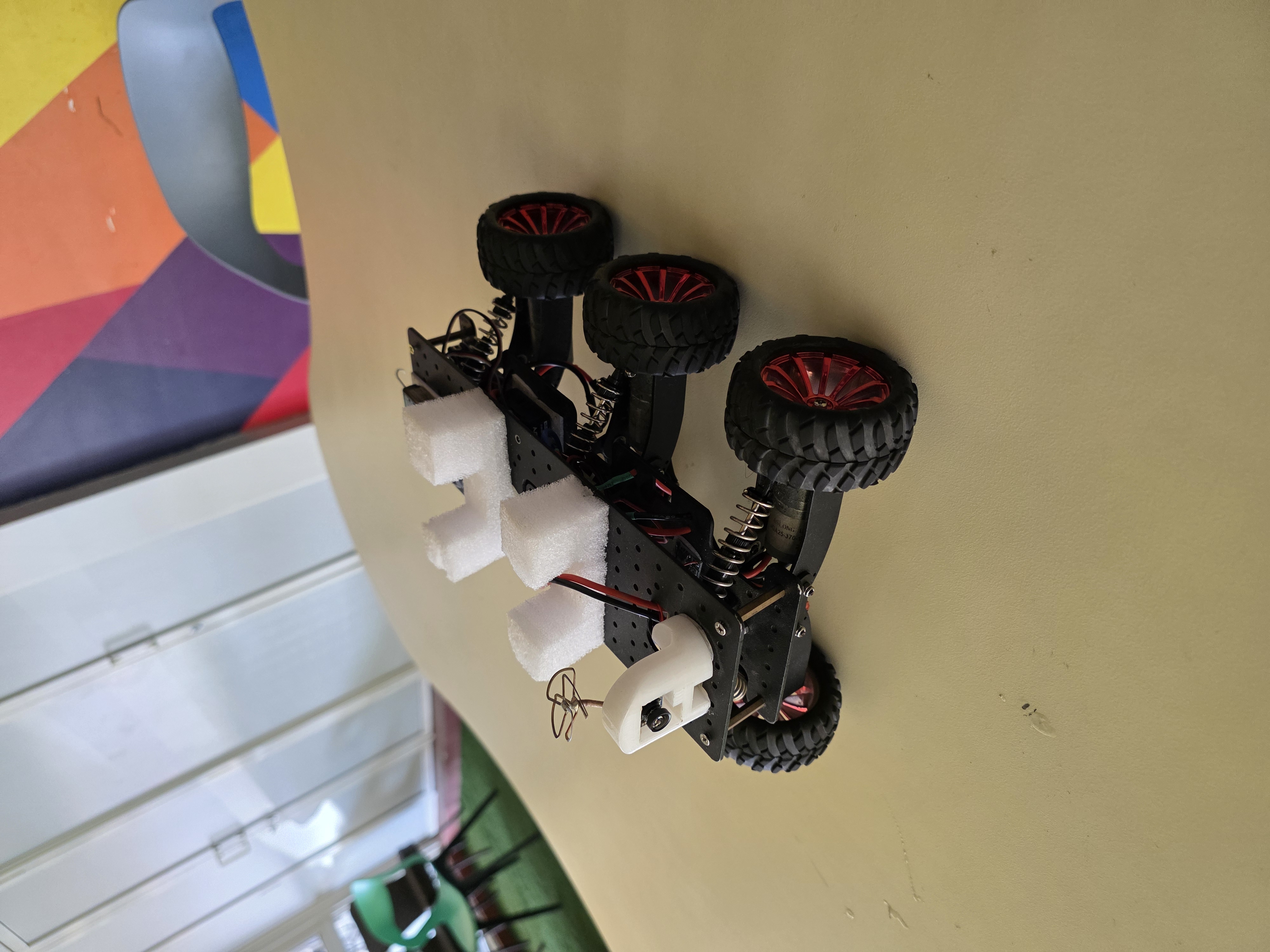
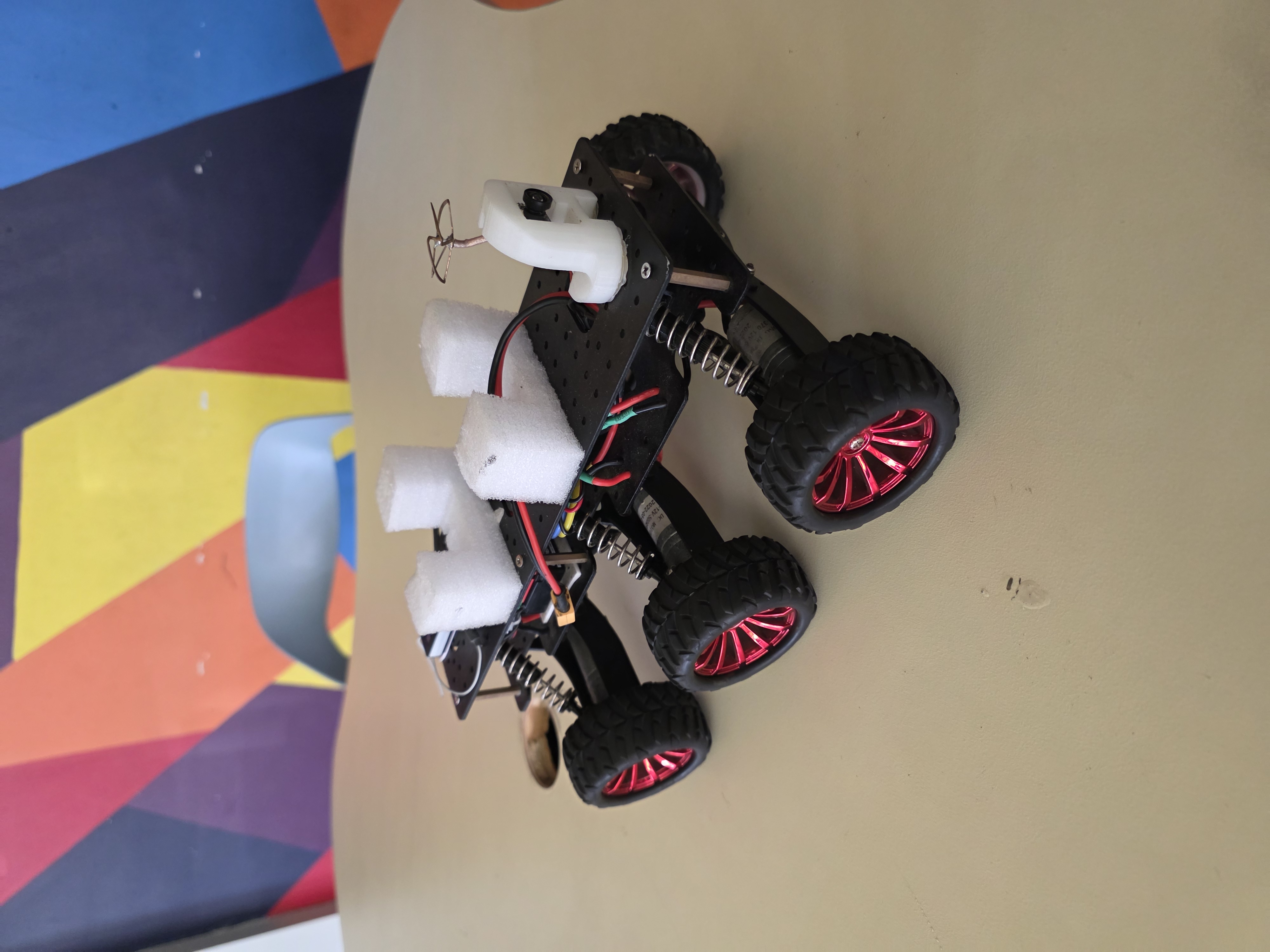
Engineered a 6WD exploration rover featuring independent spring-damped suspension arms, 6 high-torque DC gear motors, high-discharge XT60 LiPo distribution, and a 3D-printed front bracket housing an analog FPV camera with high-gain cloverleaf antenna.
Architectural Blueprint & Engineering Highlights
The platform was designed from the ground up to solve concrete operational and real-world bottlenecks:
- Precision Engineering: Rigorous separation of concerns between core processing pipelines, user interaction boundaries, and device control loops.
- Reliable Infrastructure: Built using modern, industry-standard toolchains with careful attention to latency, security, and hardware-software synchronization.
- User-Centric Design: Clean, accessible workflows that eliminate manual friction, reduce human error, and provide immediate visual clarity.
- Resilient Failover: Defensive system architecture with local caching, graceful exception handling, and offline-first capabilities where applicable.
Challenges Solved & System Flow
Prior to this solution, workflows in this domain were constrained by fragmented tools, high operational latency, or expensive proprietary barriers. By delivering a custom-tailored system, K.N.Erve Technologies provided:
- End-to-End Visibility: Unified monitoring, transparent state indicators, and deterministic outputs.
- Measurable Productivity: Elimination of repetitive manual intervention through automated logic and hardware-software telemetry.
- Future-Proof Scalability: Modular architecture allowing straightforward expansion, additional sensor integrations, or enterprise API extensions.
Real-World Impact & Next Steps
This project continues to serve as an active showcase and benchmark of practical technology engineering at K.N.Erve Technologies Pvt. Ltd. Ongoing development focuses on expanding operational telemetry, refining user ergonomics, and deploying next-generation capabilities.